Traffic sources: search, social, email, paid, direct and referral
The Sources report answers the most valuable question in analytics: where do my visitors come from, and which sources bring visitors that stay?
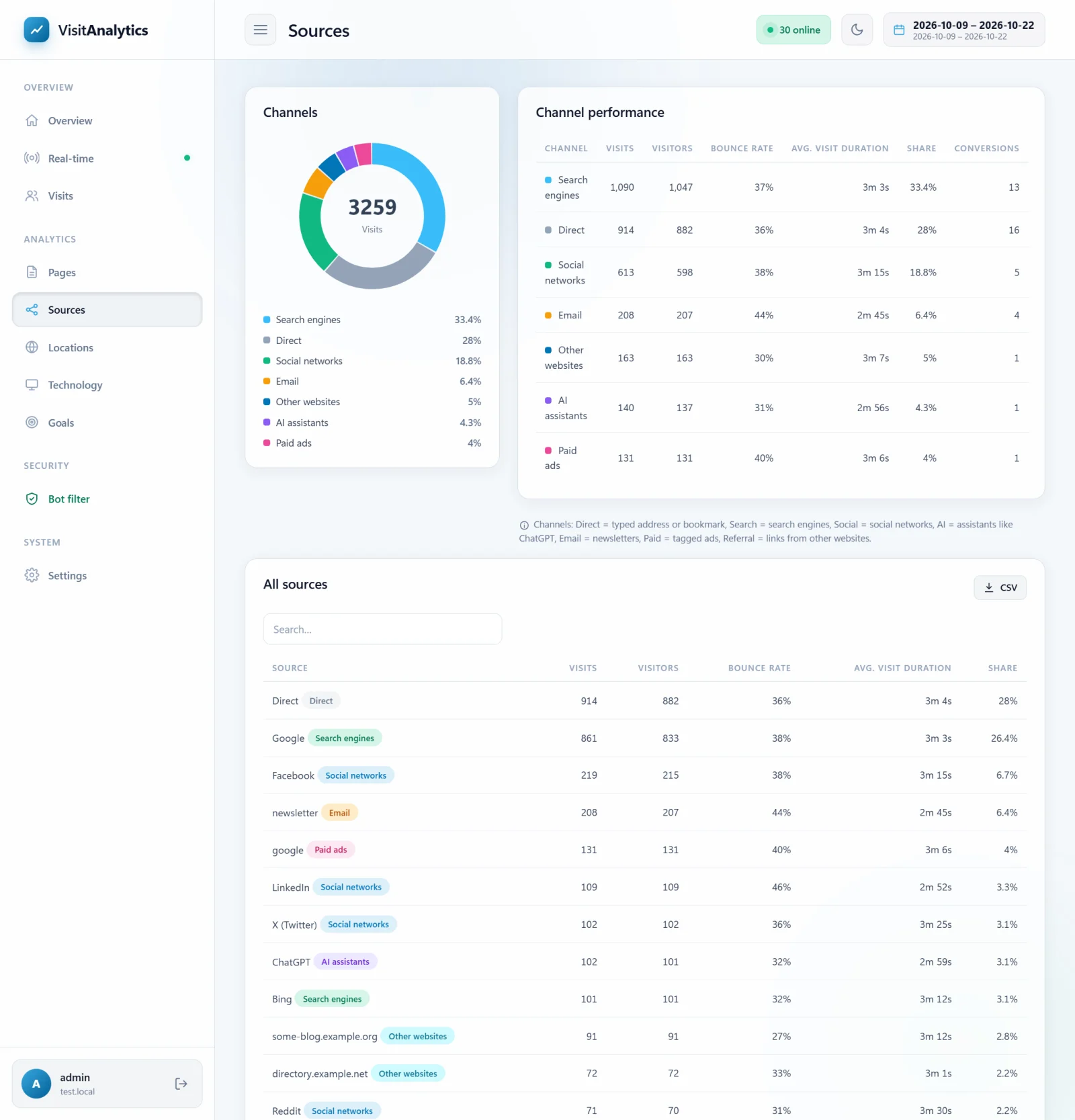
The seven channels
| Channel | What belongs to it |
|---|---|
| Direct | The visitor typed your address, used a bookmark, or came from an app that sends no referrer. Links from your own website are not a source. |
| Search engines | Google, Bing, Yahoo, DuckDuckGo, Yandex, Baidu, Ecosia, Brave Search, Qwant, Naver and others. |
| Social networks | Facebook, Instagram, X (Twitter), LinkedIn, YouTube, Pinterest, Reddit, TikTok, VK, Telegram, WhatsApp and similar. |
| AI assistants | ChatGPT, Perplexity, Claude, Gemini, Copilot and others. See Track visitors from ChatGPT, Perplexity and other AI assistants. |
Webmail clients and links tagged with utm_medium=email. | |
| Paid ads | Links tagged as cpc, ppc, paid, display and similar, or carrying an ad click ID such as gclid or msclkid. |
| Other websites | Any other website that links to you (a referral). |
Campaign tags (UTM) always win over the referrer: a Facebook visit tagged utm_medium=cpc is "Paid ads", not "Social networks". See Campaign tracking with UTM parameters.
Channel performance
For every channel you see visits, visitors, bounce rate, average visit duration, share and conversions (from your goals). A channel with fewer visits but a low bounce rate and many conversions can be worth more than a big one that bounces.
The other tables
- All sources – every single source (Google, Facebook, a newsletter name...) with its channel.
- Referring websites – domains that link to you, with a link to open them.
- Referring pages – the exact pages that contain the links.
- Campaigns – tagged links, see Campaign tracking with UTM parameters.
- Search terms – words people searched for. Google and most search engines no longer share them, so this list is usually short; it is filled when an engine or an internal tool passes the words.
HTTPS websites receive the referrer only if the other site allows it (the "referrer policy"). Visitors from apps, some social networks and private windows may therefore appear as Direct.
Last updated